
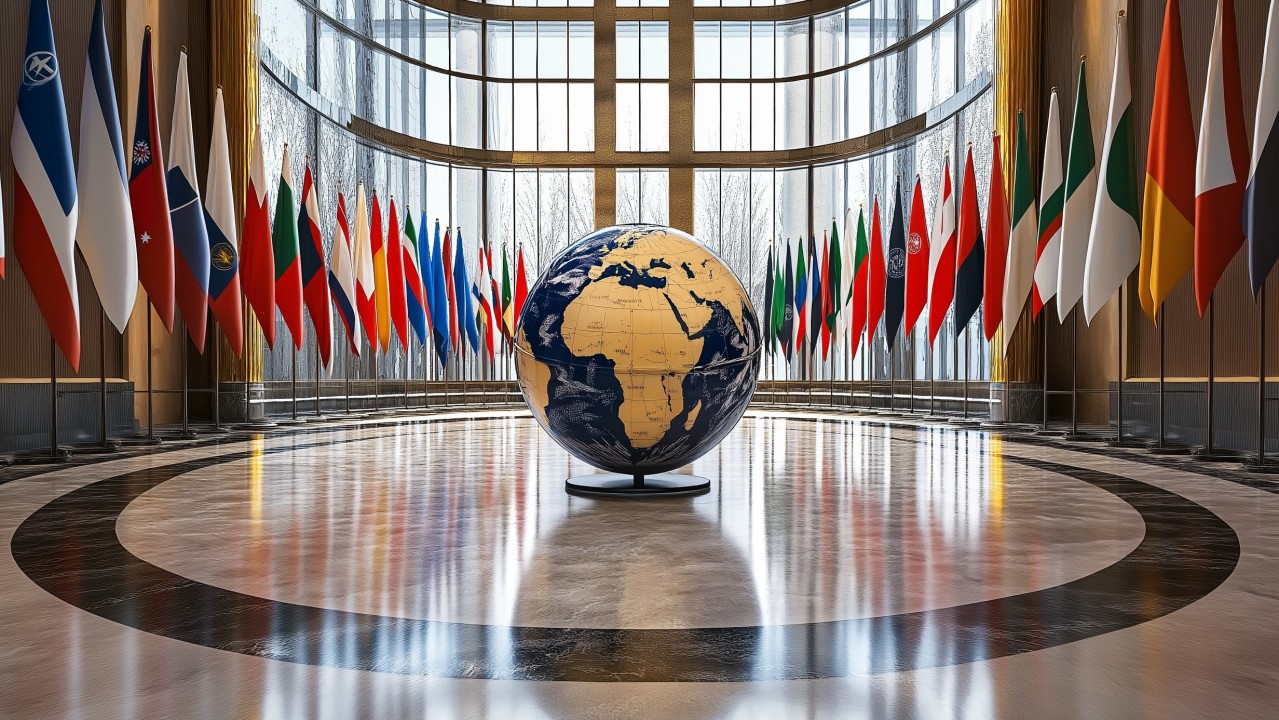
For centuries, the map defined power.
Borders marked authority. Flags symbolized sovereignty. Armies defended territory, and diplomacy flowed through embassies. The international system revolved around the nation-state — the unquestioned centerpiece of global politics.
But in the 21st century, power has begun to leak beyond borders.
Corporations influence geopolitics. Technology platforms shape public discourse. Armed groups control territory. Activists mobilize transnational movements. Financial networks move faster than legislation.
The question is no longer whether non-state actors matter.
It is how much.
The Corporate Superpowers
Some multinational corporations command revenues exceeding the GDP of mid-sized nations. Their decisions ripple across supply chains, labor markets, and technological ecosystems.
Technology giants, in particular, occupy a unique position. Platforms owned by companies like Meta Platforms and Google shape political communication, regulate speech through content moderation, and influence electoral environments worldwide.
When a platform changes its algorithm, public discourse shifts.
When a corporation withdraws from a market in response to sanctions, it amplifies geopolitical pressure.
These firms are not elected. Yet their policies can alter the informational and economic landscape of entire regions.
Corporate power now intersects directly with national strategy.
Financial Networks and Invisible Influence
Global finance operates across borders with remarkable speed.
Investment funds, credit rating agencies, and institutional investors influence fiscal stability and political outcomes. A downgrade from a major ratings agency can increase borrowing costs for governments overnight.
Sanctions regimes — often coordinated by states — rely heavily on private banks and compliance departments to enforce restrictions. In effect, non-state financial actors implement geopolitical strategy.
Capital flows, once viewed as purely economic, now function as instruments of pressure and persuasion.
The battlefield extends into bond markets and currency exchanges.
Armed Non-State Actors
Not all non-state power is corporate or financial.
Militant groups, insurgencies, and private military contractors have reshaped conflict dynamics. Organizations such as Hezbollah or the former Islamic State have exercised territorial control, influenced regional politics, and conducted cross-border operations.
These actors often blur lines between governance and militancy, providing social services while engaging in armed struggle.
Private military companies add another layer. By operating in legal gray zones, they allow states to project force indirectly, complicating accountability and attribution.
The monopoly on legitimate violence — once the hallmark of state sovereignty — is increasingly contested.
Civil Society and Transnational Activism
Non-state power is not solely coercive.
Civil society organizations, advocacy networks, and grassroots movements exert moral and political pressure across borders. Climate activism, human rights campaigns, and anti-corruption initiatives mobilize global audiences.
Movements like Fridays for Future have demonstrated how decentralized activism can influence policy debates on climate change. International NGOs document abuses, lobby institutions, and shape global narratives.
In some cases, these actors hold governments accountable more effectively than formal diplomatic mechanisms.
Power now flows through networks of persuasion as much as through formal authority.
Technology and the Democratization of Influence
The digital age has lowered barriers to entry for global impact.
A single viral video can spark protests. A coordinated online campaign can pressure corporations. Cryptocurrency networks challenge traditional financial oversight.
Decentralized technologies disrupt conventional hierarchies. Blockchain-based systems aim to operate without centralized control. Online communities organize across continents without formal leadership structures.
Information itself has become a form of power — borderless and instantaneous.
Yet this democratization carries risk. Disinformation networks, extremist recruitment, and cybercriminal organizations exploit the same tools.
The diffusion of power is not inherently stabilizing.
It is transformative.
International Institutions and Hybrid Authority
Even traditional international organizations function as hybrid entities.
Bodies like the United Nations rely on state membership but often collaborate with NGOs, private sector partners, and philanthropic foundations.
Public-private partnerships address global health, development, and infrastructure challenges. During global crises, coordination between governments and pharmaceutical companies becomes essential.
Authority is increasingly shared.
The architecture of governance grows more complex, reflecting a world where solutions demand cross-sector collaboration.
The Erosion — and Reinvention — of Sovereignty
Does the rise of non-state actors signal the decline of the nation-state?
Not necessarily.
States remain uniquely capable of legislating, taxing, and waging war. They regulate corporations, negotiate treaties, and enforce borders.
However, sovereignty is being redefined.
Instead of absolute control within territorial lines, sovereignty now involves managing interdependence — navigating corporate influence, technological infrastructure, and global civil society.
States must compete and cooperate with actors they do not fully control.
The power equation has shifted from dominance to negotiation.
The Strategic Implications
For policymakers, the rise of non-state power complicates strategy.
Diplomacy now extends beyond foreign ministries to corporate boardrooms. Security planning must account for cyber actors and private contractors. Economic policy intersects with multinational supply chains.
Traditional tools of statecraft — sanctions, alliances, deterrence — operate within a broader ecosystem of influence.
Ignoring non-state actors risks strategic blind spots.
Engaging them requires new frameworks of accountability and partnership.
Opportunity and Uncertainty
The diffusion of power creates both opportunity and instability.
On one hand, non-state actors can innovate rapidly, mobilize resources efficiently, and address global challenges creatively.
On the other, fragmented authority can hinder coordination, dilute responsibility, and amplify conflict.
Global politics becomes less hierarchical and more networked.
Influence is earned not only through territory but through connectivity.
A Borderless Era
The modern world is not post-state — but it is post-monopoly.
Power resides in code as well as constitutions, in boardrooms as well as parliaments, in social movements as well as security councils.
The map still matters.
But it no longer tells the whole story.
Beyond borders, a dense web of corporations, activists, financiers, technologists, and armed groups shape outcomes once decided exclusively by governments.
The rise of non-state power does not eliminate geopolitics.
It transforms it.
And in this evolving landscape, understanding global politics requires looking not just at nations — but at the networks that transcend them.
