
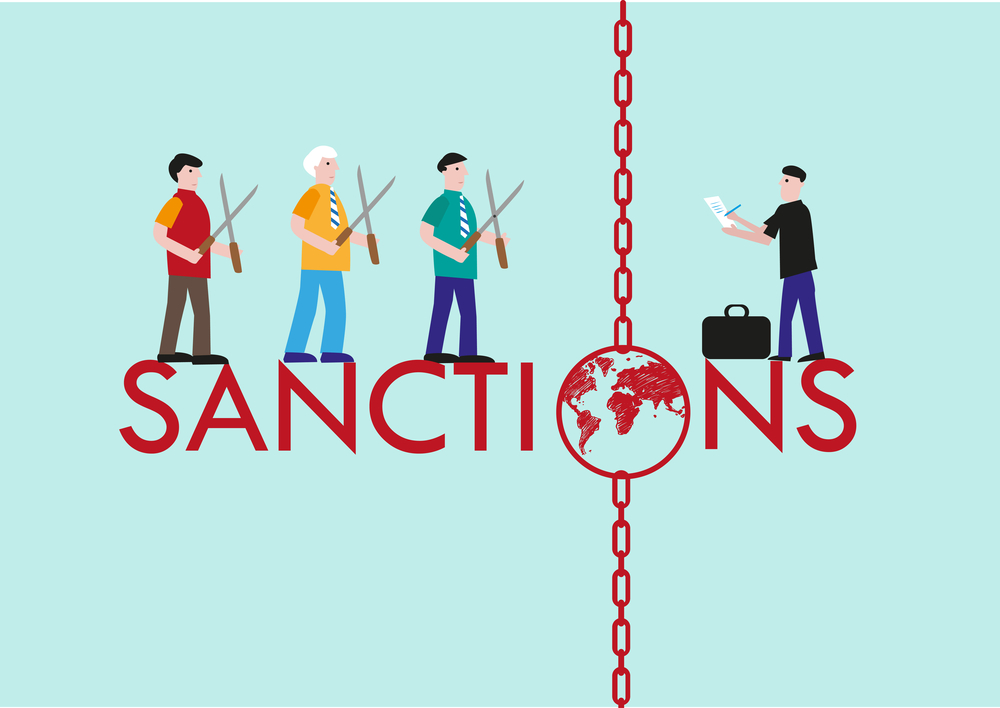
Wars are no longer fought solely with tanks and troops.
They are waged with tariffs, asset freezes, export controls, and access to payment systems. The battlefield has expanded from contested borders to central banks, shipping lanes, and semiconductor supply chains. In the 21st century, power is increasingly exercised through the architecture of the global economy.
Sanctions have become the weapon of choice — precise in theory, far-reaching in practice.
But as their use expands, so does a critical question: Are economic sanctions reshaping modern conflict — or simply prolonging it?
From Battlefield to Balance Sheet
Economic coercion is not new. Empires have long used blockades and trade restrictions to weaken adversaries. What distinguishes modern sanctions is their scale and sophistication.
Globalization has woven economies together through financial networks, energy markets, and digital infrastructure. This interconnectedness creates vulnerability. When access to global banking systems or advanced technology is cut off, the shockwaves can be immediate.
Institutions like the Society for Worldwide Interbank Financial Telecommunication (SWIFT) illustrate this leverage. Exclusion from such systems can isolate entire economies from cross-border transactions, effectively freezing trade flows.
The modern arsenal includes:
- Asset freezes targeting political elites
- Export controls on strategic technologies
- Energy embargoes
- Secondary sanctions penalizing third-party actors
These tools aim to pressure governments without deploying soldiers.
Sanctions as Strategic Signaling
Sanctions serve not only as punishment but as messaging.
They signal condemnation. They reassure allies. They attempt to deter further escalation.
In conflicts involving major powers, such as the tensions between the United States and Russia following the invasion of Ukraine, sanctions have been deployed at unprecedented levels. Western governments coordinated sweeping restrictions on Russian banks, oligarchs, and energy exports.
The intent was twofold: degrade economic capacity and impose long-term costs.
Yet sanctions rarely produce immediate policy reversals. Instead, they operate as slow-burning constraints, gradually tightening the economic environment.
Their effectiveness often depends less on severity than on unity. Fragmented enforcement weakens impact. Coordinated action amplifies it.
The Rise of Financial Warfare
Modern sanctions are deeply financial.
Central bank reserves can be immobilized. Sovereign debt markets can be restricted. Currency access can be curtailed.
The freezing of foreign reserves marked a turning point in economic statecraft. It demonstrated that even national monetary assets held abroad are not immune from geopolitical consequences.
This shift has prompted many states to reconsider dependence on Western financial infrastructure. Alternative payment systems, bilateral trade agreements in local currencies, and diversification of reserve holdings have gained traction.
Economic warfare, in this sense, is accelerating financial fragmentation.
Technology as a Strategic Chokepoint
Export controls on advanced technology have emerged as another decisive tool.
Semiconductors, artificial intelligence components, and telecommunications equipment sit at the heart of economic and military competitiveness. Restricting access to such technologies can hinder innovation and defense modernization.
Tensions between the United States and China over semiconductor exports exemplify this dynamic. The objective is not merely commercial advantage but strategic containment.
In the modern era, denying chips can be as consequential as denying oil.
Technology sanctions represent a recognition that economic dominance increasingly hinges on digital supremacy.
The Human and Humanitarian Cost
Sanctions are often described as targeted — aimed at elites rather than populations.
Reality is more complex.
Broad financial restrictions can disrupt supply chains, inflate prices, and limit access to essential goods. Humanitarian exemptions exist, but logistical barriers and compliance fears frequently hinder relief efforts.
Critics argue that sanctions risk collective punishment. Supporters contend that economic pressure offers a less violent alternative to military intervention.
The ethical balance remains contested.
Can sanctions be both forceful and humane? The answer often depends on design, enforcement, and duration.
Adaptation and Resilience
Sanctioned states rarely remain passive.
They adapt.
Parallel trade networks emerge. Informal financial channels expand. Domestic production is incentivized. Strategic partnerships deepen with non-participating countries.
Russia, Iran, and North Korea have all developed mechanisms to mitigate economic isolation, though at significant cost.
Sanctions reshape economies — but they do not necessarily collapse them.
In some cases, they reinforce nationalist narratives, enabling leaders to frame hardship as external aggression rather than internal failure.
Economic pressure can consolidate resolve as much as it fractures it.
The Risk of Overuse
As sanctions become more common, their potency may erode.
Frequent deployment risks normalizing economic coercion. Countries may preemptively insulate themselves from potential restrictions by diversifying trade partners and reserve currencies.
The dominance of the U.S. dollar in global trade has amplified Washington’s sanctions power. Yet persistent weaponization of financial infrastructure may incentivize alternatives.
Economic statecraft relies on credibility and restraint.
Overuse could accelerate the creation of parallel systems beyond traditional Western influence.
Measuring Success
Determining whether sanctions succeed is notoriously difficult.
Is success defined by regime change? Policy modification? Economic degradation? Symbolic condemnation?
In many cases, sanctions achieve partial outcomes: slowing military capacity, constraining access to capital, signaling unity among allies.
Rarely do they deliver swift political transformation.
Their impact is cumulative, indirect, and intertwined with diplomatic and military strategies.
Sanctions function less as standalone solutions and more as components of broader strategic frameworks.
A New Era of Conflict
Modern conflict increasingly unfolds below the threshold of open war.
Cyberattacks, disinformation campaigns, trade disputes, and sanctions constitute a spectrum of confrontation short of armed combat.
Economic measures allow states to exert pressure while avoiding direct military escalation. They operate in a gray zone — aggressive but deniable, forceful yet ostensibly legal.
This recalibration reflects a world wary of large-scale war but deeply engaged in strategic competition.
The Strategic Dilemma
Sanctions promise leverage without bloodshed.
But leverage without resolution can harden divisions.
The strategic dilemma lies in balancing coercion with diplomacy. Economic pressure can create incentives for negotiation — or entrench hostility.
Ultimately, sanctions are tools.
Their effectiveness depends on clarity of objectives, international coordination, and integration with broader diplomatic efforts.
They are neither panacea nor futility.
They are instruments of modern power.
The Economics of Influence
As globalization deepens, economic interdependence becomes both vulnerability and weapon.
Access to markets, technology, and capital is no longer merely economic privilege — it is geopolitical leverage.
Sanctions and strategy are inseparable in this landscape.
The future of conflict may be decided not only by armies but by access: to chips, to currencies, to energy, to systems.
The age of financial warfare has arrived.
And in this arena, the most decisive battles may unfold not on the ground — but in the invisible circuitry of the global economy.
