
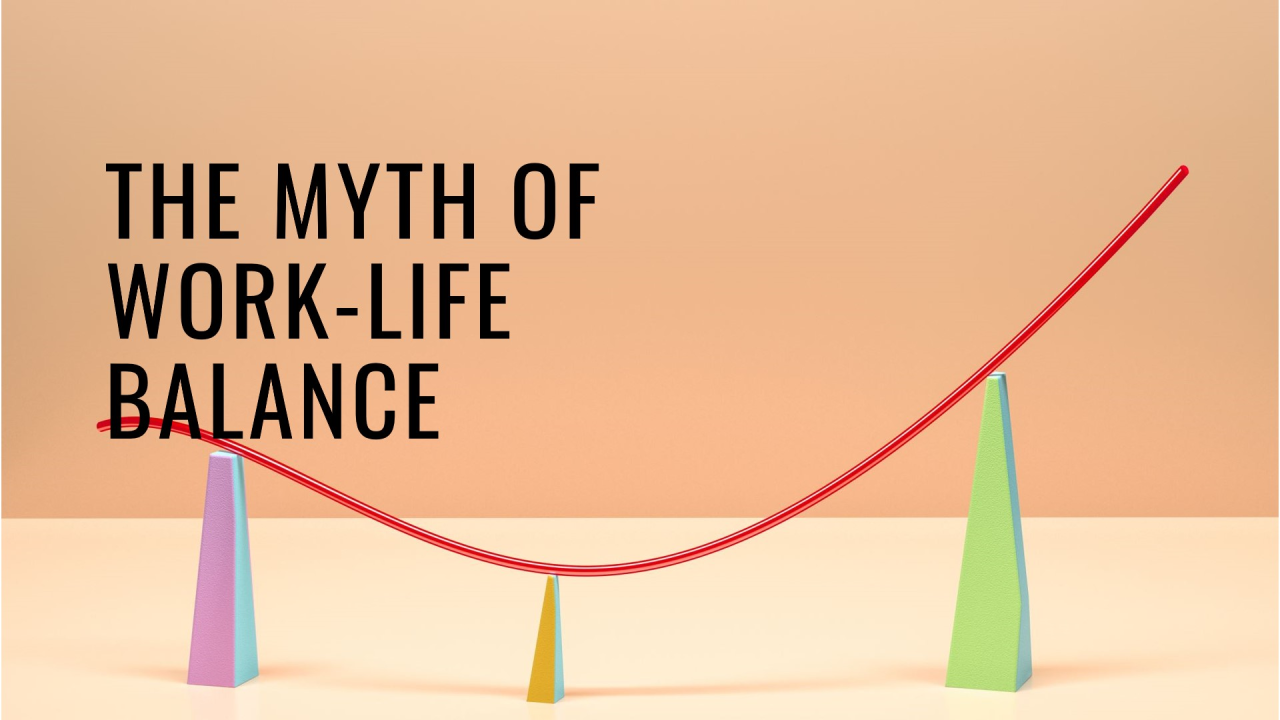
For decades, we were told to seek balance.
Balance between ambition and rest. Between meetings and memories. Between deadlines and dinner tables.
But in a world where emails arrive at midnight, laptops travel everywhere, and careers unfold across time zones, the idea of a clean divide between “work” and “life” feels increasingly outdated.
The modern conversation has shifted from balance to integration.
Yet a pressing question remains: Is work-life integration a meaningful evolution — or simply a rebranded justification for constant availability?
The Collapse of Boundaries
The traditional 9-to-5 workday was built around physical separation. Offices were distinct from homes. Commutes marked psychological transitions. Evenings belonged, at least in theory, to personal life.
Remote work, digital platforms, and global collaboration have dissolved those boundaries.
A professional in New York may respond to colleagues in Singapore before breakfast. A freelancer may answer client messages between errands. Parents may attend virtual meetings while supervising homework.
The lines blur not because people lack discipline — but because technology enables perpetual connection.
Integration emerges as both adaptation and necessity.
From Balance to Blending
“Work-life balance” implies symmetry — equal weights carefully aligned. But modern careers rarely distribute energy evenly.
Integration, by contrast, suggests fluidity.
Instead of rigid separation, it promotes alignment: structuring work around personal priorities and vice versa. It might mean leaving mid-afternoon for family time and logging back in later. It might involve building a career from a location chosen for lifestyle rather than proximity to headquarters.
In theory, integration offers autonomy.
In practice, its success depends on control.
Autonomy as the Core Variable
The critical distinction between healthy integration and hidden burnout lies in autonomy.
When individuals choose their schedules, integration feels empowering. When availability is expected rather than negotiated, it becomes exhausting.
A senior executive who structures meetings around school pickups experiences flexibility as privilege. An entry-level employee who answers late-night messages to signal commitment may experience integration as pressure.
The model itself is neutral.
The power dynamics surrounding it determine whether it liberates or depletes.
The Always-On Culture
Digital connectivity has normalized immediacy.
Instant messaging platforms, project management dashboards, and real-time collaboration tools reduce friction — but also extend expectations.
The danger of integration is subtle: without deliberate boundaries, work can seep into every pause. A quick email check during dinner becomes habitual. Weekends become partial workdays. Vacations become remote offices with scenic backdrops.
Productivity expands to fill available time.
What begins as flexibility risks becoming permanence.
The Psychological Trade-Off
Humans rely on mental transitions.
Commutes, wardrobe changes, and physical office spaces once provided psychological cues: now you are working; now you are home.
Without those cues, switching roles requires conscious effort.
Integration demands emotional discipline — the ability to be present in whichever sphere you occupy. That presence is difficult when notifications blur contexts.
The challenge is not merely logistical. It is cognitive.
True integration requires clarity about priorities and the confidence to protect them.
The Entrepreneurial Perspective
For entrepreneurs and freelancers, integration is often unavoidable.
When personal identity intertwines with professional ambition, separating the two can feel artificial. Passion projects bleed into weekends; creative ideas surface at odd hours.
Yet even in entrepreneurial settings, boundaries matter.
Sustainable integration recognizes cycles — periods of intensity balanced by intentional recovery. Without recovery, innovation dulls and resilience weakens.
The myth is that constant immersion equals commitment.
The reality is that endurance depends on rest.
Generational Shifts
Younger professionals are redefining expectations.
They prioritize flexibility, remote options, and mental health considerations. Career paths are less linear; success metrics more personalized.
For many, integration is less about working more and more about working differently.
They reject the binary choice between career and personal fulfillment. Instead, they seek roles that align with values, location preferences, and lifestyle design.
Integration becomes a strategic choice — not a default condition.
Leadership and Organizational Responsibility
Work-life integration cannot succeed on individual effort alone.
Organizations shape norms.
Leaders who send late-night emails implicitly set expectations. Companies that celebrate overwork reinforce unhealthy patterns. Conversely, teams that respect asynchronous communication and outcome-based evaluation foster sustainable integration.
The most forward-thinking workplaces focus on performance, not presence.
They measure results rather than screen time.
Integration thrives in cultures that reward efficiency and trust rather than constant visibility.
Designing Intentional Boundaries
If integration is to function as a mindset rather than a myth, it requires intentional structure.
Some practical frameworks include:
- Defined offline hours
- Notification management
- Dedicated workspaces at home
- Scheduled digital sabbaticals
- Clear communication about availability
These are not rigid barriers, but guardrails.
They preserve the flexibility integration promises while preventing it from eroding personal time.
The Illusion of Perfection
Perhaps the most misleading aspect of the integration debate is the expectation of seamless harmony.
There will be seasons when work dominates — product launches, exam periods, strategic pivots. There will be seasons when personal life requires priority — caregiving, health challenges, transitions.
Integration is not a static equilibrium.
It is an ongoing negotiation.
The myth lies in imagining that it can be permanently optimized.
A Mindset of Alignment
So is work-life integration a myth or a mindset?
It becomes a myth when it masks overwork and erases boundaries.
It becomes a mindset when it aligns professional ambition with personal intention.
The difference lies in agency.
When individuals control their engagement — when they can lean in without losing themselves — integration feels like freedom.
When engagement is dictated by unspoken expectations, it feels like erosion.
The Real Measure of Success
Ultimately, the goal is not perfect balance or flawless blending.
It is sustainability.
A life where professional growth coexists with meaningful relationships. Where ambition does not eclipse health. Where productivity does not silence presence.
In a world that resists neat compartments, integration may be inevitable.
But whether it becomes empowering or exhausting depends on how consciously it is designed.
Work-life integration is neither inherently myth nor miracle.
It is a framework.
And like any framework, its success depends on the clarity, courage, and boundaries of those who live within it.
